24/7 Emergency Response — CALL (352) 247-2220

Water System Diagnostics Marion County, FL — Full Well System Inspection | Topside Well Service
🔍 Diagnose Before You Spend

Water System Diagnostics & Full Inspection — Marion County, FL

Something's wrong with your well system but not sure what? Got a quote you're not confident in? We test every component of your above-ground well system and tell you exactly what's failing — before recommending or charging for any repair.

Full Above-Ground System Assessment Second Opinions Welcome Firm Quote Before Any Work
Schedule a Diagnostic Visit
Not Sure What's Wrong? Call Us
📞
(352) 247-222024/7 — emergencies always first
— or —
Request a Callback →

Serving all 13 Marion County communities

Signs Your Well System Needs a Diagnostic Visit

Well problems are almost never as obvious as they look. A waterlogged pressure tank produces identical symptoms to a failing pump motor. A seized capacitor looks exactly like a dead pump from the outside. Without actually testing the system, it's impossible to know which component is causing the problem — and replacing the wrong thing is expensive.

A diagnostic visit pays for itself many times over by identifying what's actually failing before any money is spent on parts or labor.

🔄
Pump Runs Constantly
Won't shut off — can't reach cut-out pressure
Clicking Pressure Switch
Rapid short-cycling — usually a tank issue
🚰
Intermittent Water Loss
Water cuts in and out randomly
📉
Low or Dropping Pressure
Whole-house pressure that keeps declining
🔇
Pump Hums, No Water
Motor on but not spinning — turn off immediately
💨
Air Sputtering From Taps
Air mixing with water throughout the day
💡
High Electric Bill
Pump running more frequently than it should
Got a Quote You're Unsure About
Second opinion — we'll tell you what we actually find
📍 Why Marion County Systems Are Harder to Self-Diagnose

Marion County's Floridan Aquifer produces hard limestone-filtered water that deposits scale on pump components and pressure switch ports over time — causing symptoms that don't match typical descriptions. Add Florida's lightning environment (which damages capacitors in ways that look identical to motor failure) and seasonal water table fluctuation, and you have a system that genuinely requires local expertise to diagnose accurately.

Got a Quote You're Not Sure About?

We regularly hear from Marion County homeowners who were quoted a full pump replacement — only to discover the actual problem was a pressure switch, a failed capacitor, or a waterlogged tank. Those repairs cost a fraction of a pump replacement.

  • We diagnose the system ourselves — independently, from scratch
  • We tell you exactly what we find, including if the original quote was correct
  • If you don't need what you were quoted, we'll tell you that too
  • Firm upfront price before any work — no obligation to proceed
Second Opinion Service
Not Confident in Your Current Quote?

Call us. We'll come out, test the full system, and give you an honest assessment of what's actually failing — and what it actually costs to fix.

📞 (352) 247-2220

Guessing vs. Knowing — The Cost Difference Is Real

Many homeowners — and some contractors — replace parts hoping to fix the problem. Testing first means you only pay for what's actually broken.

🎯
Find the Real Cause

A waterlogged pressure tank and a failing pump motor produce identical symptoms. A failed capacitor looks exactly like a dead motor. The only way to know the difference is to actually test both.

Most "no water" calls we see are NOT the pump.
💰
Only Fix What's Broken

You don't replace a pump that just needs a new pressure switch or capacitor. Accurate diagnosis before repair prevents spending on the wrong component — every single time.

Capacitor replacement vs. pump replacement — very different cost.
Lasting Results

Fixing the symptom without finding the root cause leads to repeat failures within months. Identifying the actual failing component means the repair holds — and you don't call us back for the same problem next year.

Example: New pump installed — short cycling still present.

Every Component We Inspect During a Diagnostic Visit

We assess the full above-ground system — not just the most obvious symptom. This is the only reliable way to find what's actually causing the problem.

01
🔩
Well Pump Performance & Output

We measure actual pump flow rate and pressure output against specifications. Gradual output decline — often invisible to the homeowner — is the earliest sign of impeller wear or a motor beginning to fail. We also check whether the pump is running dry, one of the most common causes of premature motor failure in Marion County's dry season.

What we find → Impeller wear, motor degradation, pump running dry, output below spec
02
🛢️
Pressure Tank Integrity & Air Charge

We check the pre-charge at the Schrader valve and confirm it's set at 2 PSI below cut-in pressure. We test for waterlogging and assess bladder integrity. A failing tank is the single most commonly misdiagnosed component in well systems — it produces symptoms identical to pump failure but costs far less to address.

What we find → Waterlogged bladder, incorrect pre-charge, tank age and condition
03
🎛️
Pressure Switch Calibration & Contacts

We verify actual cut-in and cut-out pressures and the 20 PSI differential. We check contacts for wear, oxidation, or fusing. A stuck pressure switch causes a pump to run continuously and is one of the most common inexpensive fixes we make. Switch calibration drifts gradually, often causing subtle performance issues the homeowner never attributes to the switch.

What we find → Stuck contacts, calibration drift, incorrect differential, chattering switch
04
Control Box & Capacitor Assessment

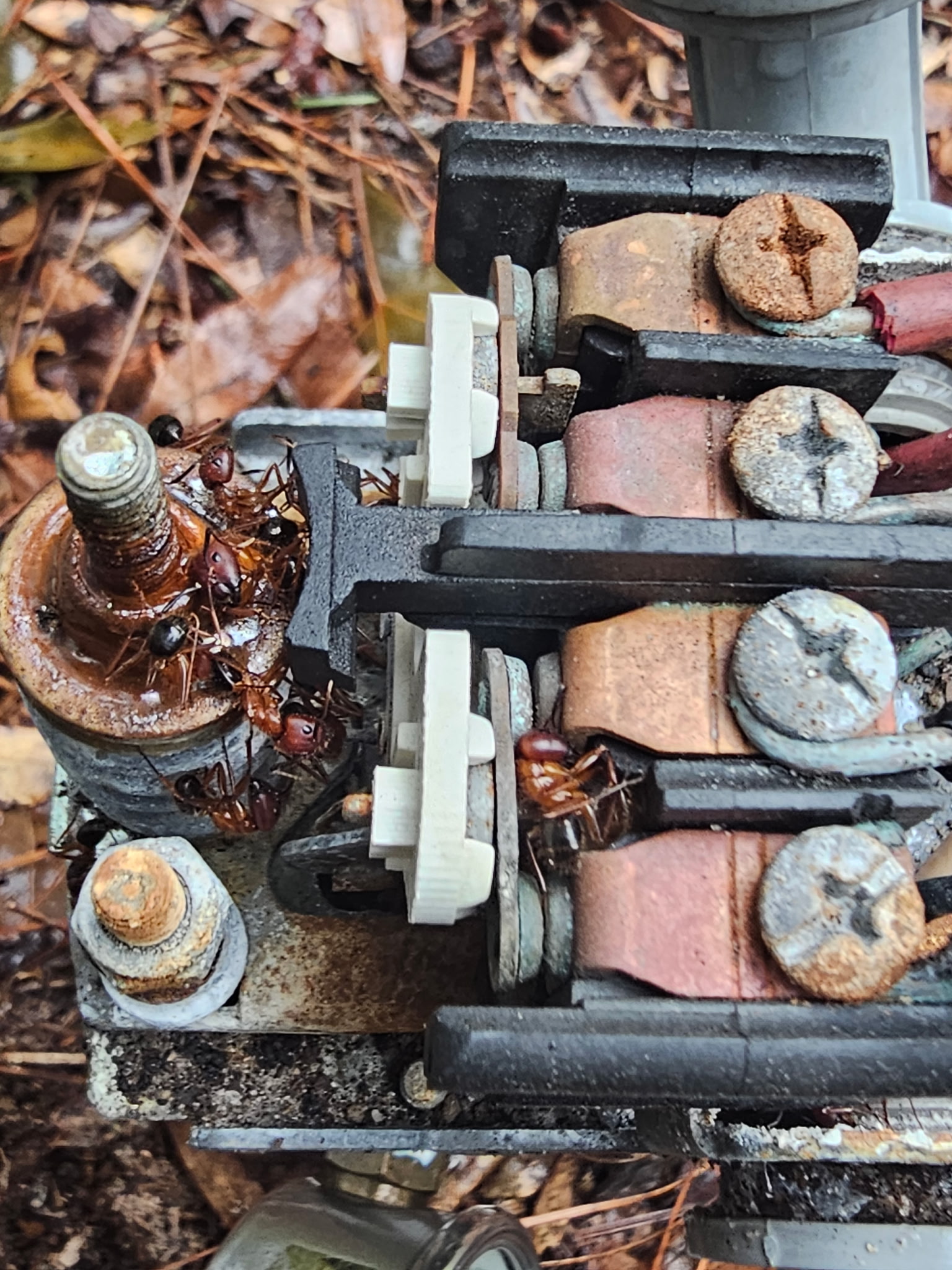
We inspect for heat damage, moisture, and corrosion and assess start and run capacitors for degradation. In Marion County's lightning environment, capacitors absorb surge stress that progressively shortens their life without causing immediate failure. A failed starting capacitor causes a pump that hums but won't run — identical to a seized motor, but repairable for a fraction of the cost.

What we find → Failed capacitor, heat damage, moisture intrusion, lightning damage
05
💧
System Pressure & Flow Testing

We measure static and dynamic pressure at multiple points to identify pressure drops, restrictions, clogged lines, or system leaks. Gradual whole-house pressure decline rarely comes from pump failure — it's more commonly a miscalibrated switch, a partially clogged intake screen, or a developing system leak.

What we find → System leaks, restrictions, calibration issues, flow below spec
06
🔌
Fittings, Connections & Wiring

We inspect all visible fittings, unions, and pipe connections for drips, mineral buildup, or early corrosion. Small leaks bleed enough pressure to trigger constant pump cycling. We check wiring for fraying, heat damage, or loose connections that can cause intermittent failures impossible to reproduce without on-site testing.

What we find → Pressure leaks, corroded connections, wiring faults, loose terminals

Ready to Find Out What's Actually Wrong?

We test the full system and tell you exactly what's failing before recommending anything.

📞 Call (352) 247-2220

What We Find — and What It Means for Your Repair Cost

These are the most common diagnostic findings in Marion County well systems — and why accurate diagnosis before repair changes the cost dramatically.

Symptom: Short cycling / pump clicking
Waterlogged Pressure Tank

Bladder failure causes the pump to restart every few seconds instead of a few times per day. A tank replacement stops short cycling immediately and protects the motor from burnout.

Minor repair — usually same visit
Symptom: Pump hums, no water output
Failed Starting Capacitor

The motor has power but can't start rotating. Looks identical to motor failure — costs far less. Turn the breaker off if this is happening right now.

Minor repair — usually same visit
Symptom: Pump runs constantly, won't shut off
Stuck Pressure Switch

Contacts fused in the on position prevent the switch from signaling the pump to stop. An inexpensive replacement resolves it and prevents motor burnout from continuous running.

Minor repair — usually same visit
Symptom: Gradual whole-house pressure loss
Pressure Switch Calibration Drift

Cut-in and cut-out pressures drift over months, causing the system to operate below its designed pressure range. Recalibration during the diagnostic visit often resolves this with no parts needed.

Minor — often no parts needed
Symptom: No water after a storm
Lightning-Damaged Control Box

A nearby lightning strike can damage capacitors and control components without any external signs. A control box replacement is a moderate repair — far less than a full pump pull.

Moderate repair
Symptom: Years of decline, no water
Pump Motor or Impeller Failure

After ruling out all component-level failures, a motor that genuinely won't produce adequate output may need replacement. We confirm this is actually the cause before recommending the larger repair.

Major — full diagnostic confirms first
Topside Well Service technician performing full water system diagnostics in Marion County FL
🔍 Full System Assessment

What Happens During a Diagnostic Visit

Systematic, transparent, and fast. Here's exactly what happens when we come out.

1
We Listen & Gather History

When the problem started, what changed, any unusual sounds, and how long the system has been in place. A problem that started after a storm points in a very different direction than one that developed gradually over months.

2
Full Visual Inspection

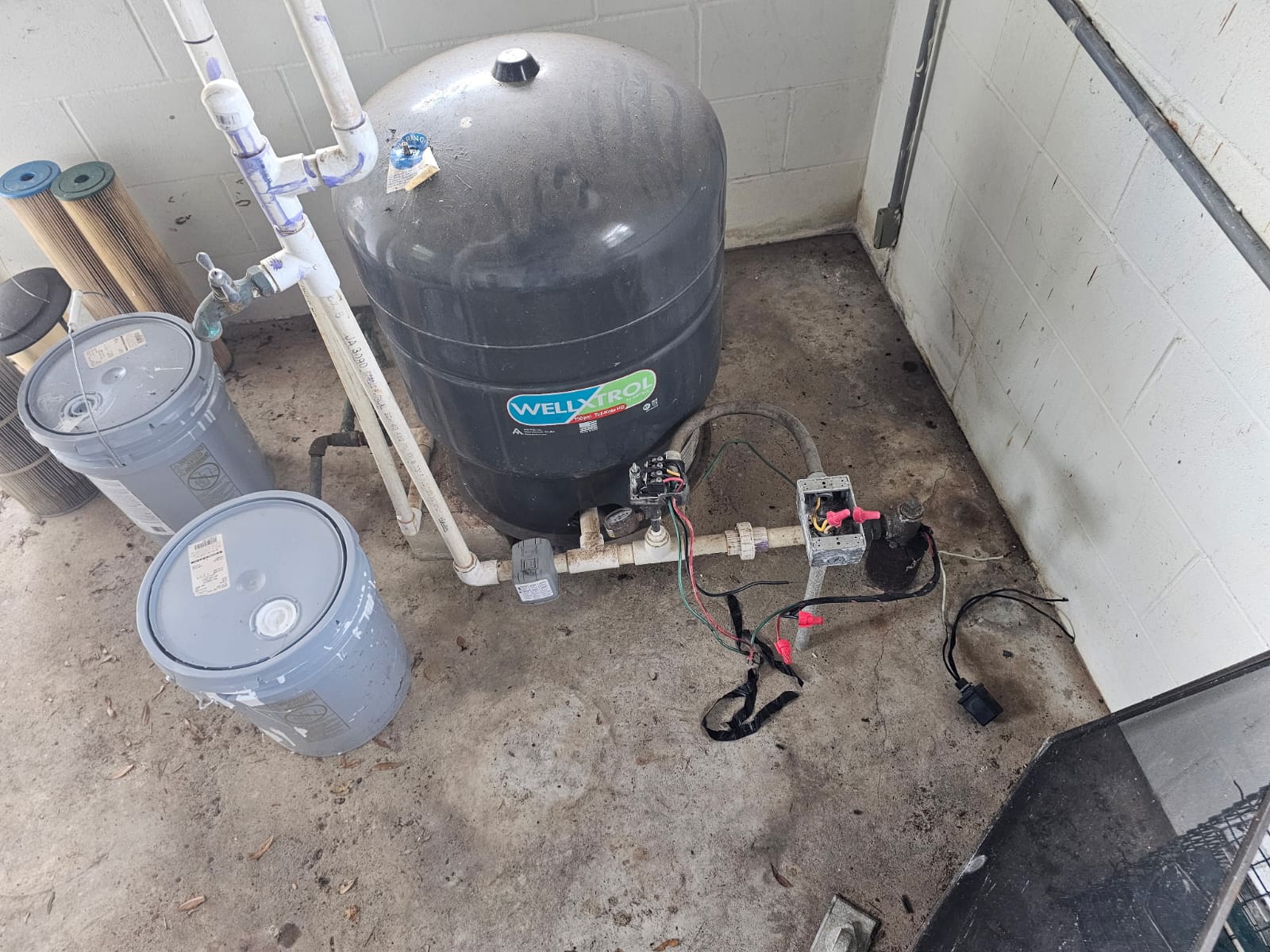
We inspect the pressure tank, pump head, pressure gauge, switch, and all visible fittings for physical signs of wear, corrosion, or failure before running any performance tests.

3
System Performance Testing

We test pump output, tank pre-charge, switch calibration, and capacitor condition under both static and dynamic conditions to isolate exactly what's failing — and what isn't.

4
Clear Explanation of Findings

We tell you exactly what we found, what caused it, and what it takes to fix it — in plain language. No technical jargon, no vague "it could be the pump." You know exactly what's wrong before we quote you anything.

5
Firm Upfront Quote — You Decide

A clear, firm price for any recommended repair before we touch anything. You decide whether to proceed. No pressure, no obligation. If you choose not to proceed, you pay only for the diagnostic visit itself.

Water System Diagnostics — Common Questions

What Marion County homeowners ask before scheduling a diagnostic visit.

Why does my well pump keep running and won't shut off?
Most commonly a waterlogged pressure tank — pressure drops the instant the pump stops so it can never stay off. Also common: a pressure switch stuck in the on position, a system leak the pump is compensating for, or a worn impeller that can't generate cut-off pressure. A diagnostic visit tests each cause starting with the least expensive. See: 8 Warning Signs Your Pump Is Failing →
Why did I suddenly lose all water from my well?
Most common causes: a failed pressure switch, a burned-out starting capacitor in the control box, a waterlogged pressure tank that tripped the breaker, or a failed pump motor. Post-storm calls in Marion County are usually control box damage from lightning — not the pump itself. We diagnose the full system before recommending any repair. Full guide: No Water From Your Well? What To Do →
Can low water pressure be fixed without replacing the pump?
Often yes. Gradual whole-house low pressure is frequently a waterlogged pressure tank (most common), a miscalibrated pressure switch that has drifted, or mineral scaling on the pump intake screen from Marion County's hard water. Full pump replacement is rarely necessary for gradual pressure loss alone — a diagnostic visit identifies the actual cause first.
How do I know if my pressure tank is failing?
Signs: pump clicking on every few seconds, pressure surging and dropping in the shower, banging pipes, and zero air at the Schrader valve on top of the tank (water comes out instead of air when pressed). We test bladder integrity and pre-charge directly during the diagnostic visit — often the first component we assess because it mimics so many other symptoms. See: Pressure Tank Replacement →
Do I have to proceed with repairs after a diagnostic visit?
No. After the inspection, we give you a clear upfront quote for any recommended repair. You decide whether to proceed. We never start repair work without your explicit approval of the price. If you choose not to proceed, you pay only for the diagnostic visit — the cost of knowing what's wrong, with no obligation attached.
Can you give a second opinion on a pump replacement quote?
Yes — call us at (352) 247-2220. We regularly find that Marion County homeowners quoted a full pump replacement actually have a pressure switch, capacitor, or pressure tank as the root cause. We'll diagnose the system independently and give you an honest assessment of what we actually find. If the original quote was correct, we'll tell you that too.
Do you offer emergency diagnostic visits?
Yes. If you have no water or a critical failure, call us at (352) 247-2220 — we provide 24/7 response for emergency diagnostic calls throughout all of Marion County. Emergency calls go to the front of the line. See our emergency well service page for more.
What's the difference between diagnostics and annual maintenance?
A diagnostic visit is reactive — triggered by a specific symptom, focused on finding the cause. An annual maintenance inspection is proactive — we assess the full system looking for components wearing out before symptoms appear. If something's wrong right now, start with diagnostics. If the system seems fine but hasn't been serviced in 1–2 years, annual maintenance is the right service.

Marion County Homeowners Trust Topside

Diagnostic Visits Across All of Marion County

We perform diagnostic visits throughout all 13 Marion County communities — same thorough testing, same honest findings, same upfront pricing wherever you are in the county.

📞 Call (352) 247-2220

Not Sure What's Wrong With Your Well?

We'll find the real problem — and tell you exactly what it costs to fix before we touch anything.

📞 Call (352) 247-2220
Not sure what's wrong?

Call us — we'll find the real problem

📞 Call Now